Presidential Selection Committee

With S.U. President Andy Hogan’s State of the Union Address having been delivered a mere few hours ago (ok…8), one question is on the minds of all connected to the Brandeis community: how will Hogan lead the university in our search for a new president?  More importantly, will he follow through on his promises to involve students in this search?

Well, he already has– to an extent.  Hogan announced today that after much negotiation, the Presidential Selection Committee has agreed to accept a student on the board, that student being Hogan himself.  This announcement came amidst uproar by students in reaction to the news that there would be no students on the Presidential Search Committee.  But isn’t Andy Hogan, the SU president, too bogged down in in-school politics and the administration to advocate for us effectively in such a role?  In addition, Hogan has been assigned the role of a “substantive representative”– he has no vote, only a limited say.   I personally think this is a good start, but is not near enough. I hope that the SU will still make room for students to make an impact. Can’t we have a say in determining its future? After all, we’re greatly affected by this selection.

To start the process, we should figure out what qualities are most important to us in the selection of our next president.

Qualities almost everyone can agree on:

Accessibility:whether or not you consider Reinharz a good president, he did have regularly scheduled open office hours during which students could contact him; I’d like to see an expansion of this policy. A president who is a good communicator, and understands the needs of students. Perhaps someone who has served as a head of communication at another institution.

Ability to handle financial crisis: there has already been great outcry over the cutting of scholarships, and let’s not even mention the Rose Art Museum…our next president has to be able to deal with the ever-looming financial crisis Brandeis is in, and hopefully bring the Rose controversy to an end.  Some ideas: hire a rich, self-made president who will wave his/her salary, say, like, Mayor Bloomberg of NYC, who receives only $1 a year from the government.  Someone who has already helped other universities recuperate from similar dire financial straits.  Someone who values the arts here at Brandeis, and so will not take rash, cost-cutting actions such as closing down POSSE and other scholarship programs/groups.

-Maintain the balance between secularism and Jewish sponsorship: I don’t think anything about the relationship Brandeis has with its Jewish sponsors, and its principles of secularism and non-sectarianism has to change. it would be enough for our future president to be someone who understands the importance of this shaky relationship. The next president must stand up to those who believe that Brandeis must reflect the views of its Jewish sponsors, at the expense of maintaining its objectivity.  The next president must find new and better ways to focus Brandeis on social justice and action, based upon the principles of secular Judaism.

Keep the Pillars:When Reinharz became president of Brandeis, he brought with him the Four Pillars, focusing Brandeis’ attention on social action, and identifying the university’s principles and goals. Just because he is leaving doesn’t mean Brandeis should abandon or lose track of these principles.  The next Reinharz must be able to expand the university’s ability to achieve its goals of social justice, and find a way to make his/her personal visions for the university mesh with the path we have already been going down for some time now.

We need a new University president who will lift Brandeis up from the crises it has fallen into in recent years. One who will address the problems Hogan brought up, such as overcrowding, and who has a clear vision for the school.   And the only way we can find one who shares our outlook is by having students give their input.  Although Andy Hogan is certainly a student, because of his position in the SU he automatically comes into the selection process with a certain bias.  And with no vote, to top it off. Please, Brandeis, remedy the situation, live up to the democratic principles you stand for, and allow a student who is unaffiliated with the SU to represent the opinions of other like students, to the committee.

BREAKING NEWS: Andy Hogan on the Presidential Search Committee

This is big news.
Andy Hogan, Union President, will be a (non-voting) member of the Presidential Search Committee.

It’s been a hard slog to get to this point. And let’s be clear – it’s not enough.

But still, it’s nice to finally have a student representative on the actual committee to choose the next University President.

Edit: Plus, there’ll be one town hall and an online forum and such

News! New Cafeteria announced

We’re at Andy Hogan’s state of the union address right now. He’s just announced some cool news:

Starting this January, there’ll be a new place to get food in upstairs Levin Ballroom, in the Gluck Lounge. Cold Sandwiches, no seating, “higher quality”, and you can use either meals or points. After the Mandel Center is finished, it’ll either move to Mandel or some other cafeteria will be created in Mandel in its stead.

More news coming.

UCLA Occupied by Striking Students

Anger at tuition increases, staff and faculty cuts, and the corporatization of education has led to major actions across the University of California system in the last few months. As the UC Board of Regents meets this week, students at several schools have staged protests and occupations to demand greater access to education (as promised in the 1960 California Master Plan for Higher Education) and democratic decision-making.

Students at UC Santa Cruz and Berkeley have (attempted?) occupations. At UCLA, students have taken Campbell Hall and renamed it Carter-Huggins Hall in remembrance of Black Panthers murdered there in 1969. Although cops have tasered at least three students and beaten others, the occupation as a whole is still going strong.

More updates as they come in!

Today’s News

– Some students and faculty from Al-Quds University came to Brandeis. This is because we’ve had a partnership with them since 2003. While the article talks about them interacting with Brandeis students, let’s be serious here. They only interacted with small percentage of the Brandeis population. I might be a bit upset because I wanted to meet them, but couldn’t.

– There’s going to be a new committee on Faculty Workload.

– The Provost’s Committee on the Assessment of Student Learning is moving along. The Brandeis push for individual and departmental learning goals is continuing.

Trisk is big.

– You know the Schuster Institute for Investigative Journalism? The person who donated that money is going to be the US ambassador to the UN General Assembly. Cool!

– Students can’t choose the next University President. We do have an official student advisory panel on all this, however. They are going to hold a “Town Hall” style of event where students will lay out their vision of what a good presdient will be. This is a good step in the right direction. More on this later.

– The Student Union will soon debut a new money-management system, mandatory for all clubs. Also, a new website by thanksgiving.

– The Constitutional Review Committee met, didn’t really decide anything. A lot of stuff will be decided in the next meeting this Saturday.

– The Justice has an editorial called “Refocus Louis Louis Week”. I agree with them up to a point, but my main complaint about LL week is that it seems to involve throwing around our money for not much reason. Free food is a great way to use our money. Free trinkets? Not so much. That said, they’ve been a lot better this year; I can’t point to any example of flagrant waste this year. Good job! Also, this is probably just me being curmudgeonly, but I would like to see some sort of talk of Louis Brandeis. We’re celebrating his brithday, but not talking/learning about him at all. Why?

Hiatt gets prestigious thing

I don’t quite understand what’s going on, but it sounds cool.

Hiatt gets to be the only New England school to host 1 of 10 Presidential Management Fellows pilot sites, which, according to the press release, means this:

This rigorous leadership opportunity recruits top graduate students for a two-year developmental fellowship at various federal agencies. Fellows receive two-year paid fellowships, competitive pay and benefits, 80 hours of training each year, and accelerated promotion potential within the federal government. Last year, two graduates of The Heller School for Policy and Management were selected for this prestigious award, and 16 Heller students have been nominated for the program this year.

Good? I don’t see how this changes my life in one way or another.

Constitutional Musings

As you might know, I’m on the Consttitutional Review Committee. I get to be one of 17 people who will attempt to rewrite the Union Constitution this year.

As your representative, it behooves me to let you know what sort of changes I’m thinking about proposing. I welcome your feedback.

Snatches of thought:

  • The Senate has historically, well, sucked. How can we fix this?
  • The Problem: Senate is set up as a legislative body, but it can pass no real “laws”.
  • Lets take an analogy from like real life: a person in NYC has so many people that they elect: county eeec, local council member, borough rep, major, assemblyperson, state senate, governor, comptroller, state AG, House rep, 2 senators, + president + more local politicians that I forget. In theory, having all those positions be elected increases accountability. In reality, normal people can’t keep track of all those people they vote on, so those politicians are not accountable to anyone, since they don’t have bosses, only voters. A solution is to decrease the number of directly electable positions, but instead allow the recall. That way the people voters vote on are more likely to actually be scrutinized.
  • We could decrease the number of senators, so that each election is more important, the “quality” of senator goes up, etc.
  • People have a low opinion of the Union because their interaction with it is usually the senate. So many people have come up to me and said something along the lines of “At first I thought you were just exaggerating or crazy when you talked about how bad the Senate was, but I went to a meeting yesterday and now I understand completely.”
  • Does the Senate have a function, really? All it really needs to do is charter/recognize clubs.
  • Let’s be honest; all the power in the Union is found in the E-Board and F-Board.
  • Let’s ignore F-Board for the purposes of this conversation: it seems to work more-or-less fine.
  • If all the power is really in the E-Board, and most of the E-board is unelected, we seem to have a problem here.
  • There are alternate models to democracy than just representational voting.
  • Brandeis has less citizens than Athens did. Brandeis isn’t that big.What’s wrong with direct democracy?
  • Voting costs nothing, and with the internet, is so easy.
  • The Union doesn’t legislate. What power does it have? It’s power lies in interaction with adults, appointments to committees, and in controlling the flow of our money.
  • If you want to reform the Union, reform the process of appointments.
  • Logically, the answer to all this is to allow the Senate to confirm all appointments, or to even make the appointments themselves.
  • But! The Senate sucks!

Conclusions:

  • I want more direct democracy at Brandeis! I just don’t know how to fit that ideal into reality. I need ideas, here!
  • Non-monetary power in the Union is concentrated in a mostly-unelected e-board and in the people they appoint to University Committees.
  • Committees are where policy is made: let’s focus on that.
  • IRV voting is a more democratic form of voting, and is easy to implement and understand. We have to switch to that. Tufts, MIT, Harvard, and a bunch of other schools have already switched to that system.

What do you think should be changed about the Union Constitution?

Yes, the Rose still needs saving

So I was looking at the online poll on the Justice last week.

The whole story is that at the Rose re-opening this semester, a bunch of students wore “save the rose” buttons, and Shula Reinharz (wife of Pres. Reinharz and a Sociology Professor in her own right) was all “dude the Rose is saved. Get rid of those buttons already.” The Poll basically asked “was this thing that Shula did ok?”

Now, lets put aside the fact the allowed poll responses were awful. Actually, let’s not. For the “No, that was not OK” response, they put “No; the right to free speech should not be challenged.”

Um, if the right to free speech should not be challenged, why challenge Shula’s right to ask people to not wear buttons? A possible real “No” response might read “No; Shula acted inappropriately and rudely”, or “No; in fact, the Rose is not yet saved.”

The point is this: I don’t think whoever made that poll understands why those students were wearing those buttons in the first place. You see, the Rose still isn’t saved. The Rose is under attack, and quite possibly not actually a museum any more.

Fact: “The Rose, if it continues to function as a museum, would almost certainly be excommunicated from the community of other art museums for breaching a code against selling works (unless it is for the purpose of buying other art). It could be unable to secure loans of work from other museums. This would have a huge impact on its ability to mount exhibitions, and on its ability to attract a replacement director, if it seeks to do so.”
Fact: The Rose currently has no curator, educational director, or permanent director.
Fact: The University is in a big legal battle with the Rose trustees, and is claiming that they are of course entitled to sell whatever the hell they want

Claim: Without visiting art works or a director, the Rose would be a gallery, not a museum.

The Rose is still not saved, and the University is still trying to crush it legally.

And that, my friends, is why the Rose needs saving.

A Better Waltham Hotel

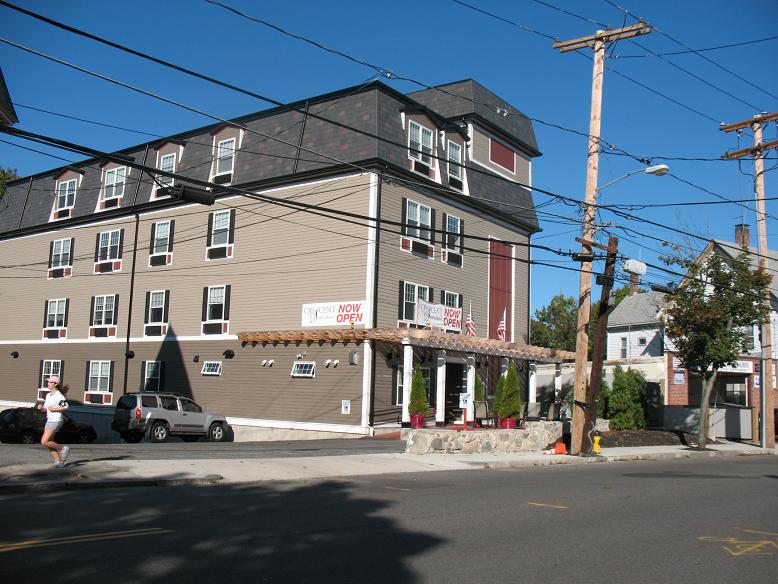
I’d like to tell you briefly about the Crescent Suites Hotel. I know Innermost Parts is not typically an outlet for hotel reviews, but it’s nice to give locally-owned businesses a bit of publicity when they start up, especially when you have a positive experience with them. And boy, I sure do love the Crescent Suites Hotel. Please note: they are not paying me to say this. Nor am I friends with the owner. I’ve just noticed that everyone who visits Brandeis students tends to use the DoubleTree or one of the other corporate hotels up on Totten Pond Road. And they shouldn’t. My parents decided to experiment with the Crescent Suites, a brand new independent hotel started by a Waltham builder. And MAN, it’s great! Cheaper than the chain hotels, with more luxurious accommodations (a full-size kitchen and double plasma TVs in nearly every room), AND a Brandeis discount. Plus the owner is incredibly helpful and loves making people free cappuccinos. I swear, it’s fantastic. And cute. Just check out the collected reviews on Google Maps. If your parents visit, send ’em to the Crescent Suites.

IMG_0213

http://maps.google.com/maps/place?cid=15438175493981658476&q=crescent%2Bsuites%2Bhotel,%2Bwaltham&hl=en&view=feature&mcsrc=detailed_reviews&num=10&start=0

“Disproportionate Use of Force” Used Against Protesters at the Goldstone Event

Today, I and a number of other students (the exact number I do not know – I estimate conservatively around twenty) stood briefly during Dore Gold’s speech during the debate (regardless of what the organizers say, this was a debate). Surely many believe that this was inappropriate and rude – and for the most part I agree, but I also think that we had an important message.

Justice Richard Goldstone is one of the most credible sources on the matter of War Crimes. He’s investigated crimes in South Africa, Rwanda, the Balkans and other hot-spots of violence. If anyone knows what a war crime is, it’s Justice Goldstone. To further add to his credibility as a neutral investigator, he is a long-time Zionist. Yet this man was pitted against a “pro-Israel” speaker – putting him in the uncomfortable position of being “anti-Israel,” which he most certainly is not. Just two weeks ago Dan Meridor was allowed to speak uncontested by a speaker from a different narrative – Goldstone should have been afforded the same respect. I am certainly not opposed to discussion and debate, but this event lopsided the discussion. No Palestinians were invited to speak and thus the Palestinian narrative was excluded from this event.

This is what we were protesting. Taped to our shirts we had the names of both Israeli and Palestinian civilian victims of the Gaza War. We stood silently – for just a few moments to let the audience know our discontent.

Though I myself was not harmed or attacked in anyway – many of my fellow protesters were physically violated for their peaceful protest. One protester commented that after she sat back down, the person in front of her repeatedly pushed their chair back against her. Another said that she was repeatedly slapped lightly by her neighbors. Yet another said that while standing she was shoved and her hair was pulled. This is most certainly a disturbing use of force, and in my mind takes away any sort of moral high-ground the right-wing might have gained from us being ‘rude.’

All of this makes me think. We live in a world where culture dictates that when we feel ‘wronged’ it is acceptable to use violence to make things right.

I have a lot of sympathy for the people of Sderot who lived in terror due to the rockets fired by Hamas from Gaza. When Israel invaded Gaza this winter – it did so to put a stop to the rocket fire. It did so under the assumption that it is acceptable to use force to right a wrong. Whether or not the invasion of Gaza did temporarily stop the rocket fire, but it did nothing to bring about a long term peace.

Hamas and other terrorist organizations fall into the same problem. They feel wronged by Israel and then think it is acceptable to use violence to make things right. Sixty years of on-and-off war has proven that this method does nothing – it hardens your enemies hatred of you and leaves behind a trail of dead civilians.

The people of Israel are scared and angry. The people of Palestine are scared and desperate. Both sides must come to realize that a failure to recognize how they have wronged the other and the use of violence will only prolong the conflict. Regardless of whether or not Israel acted ethically in Operation Cast Lead, the invasion angered Palestinians and destroyed their already weak economy, infrastructure, and usable farmland. The people of Gaza have nothing, there is very little work, very little food, very little to do. It does not surprise me that many of them turn to terrorism.

As a proud Zionist, I am determined to see the State of Israel survive this conflict. The use of force is simply a short-term strategy for creating an uneasy peace. To end the conflict, Israel must work to improve economic and living conditions in the West Bank and the Gaza. The first step is to lift the crippling economic blockade of Gaza. They must withdraw all settlements from the West Bank and East Jerusalem so that Palestinians can also have the right to self-determination. Though many may claim that these actions are counter-productive to Israel’s short-term security (they are not), in the long-run they are absolutely critical to creating a lasting peace.

Both the Israeli Government and the Palestinian people must cease using force as a means to achieve change. It cannot and will not work.

This is why I stood up today – to protest the use of violence. In using force against us, the right-wingers who opposed us achieved nothing. Yes, we were antagonistic, but we stood up for what we believed in and then peacefully sat back down.

At the Goldstone Event

Hey I’m at the Goldstone event in Levin Ballroom. Liveblogging is so 2008. Livetweeting here.

Goldstone’s speech over. He sounded really defensive to me.

During Gold’s speech, a handful of people (I saw 4) stood up with the names of people killed in Gaza. He paused, talked about how in WWII the US fought for freedom of speech, then kept going. Applause against the protesters)

Gold is done. Wow, he took a while. Very passionate/emotional case.

I feel like the two men are making separate and different cases, both of which may be mostly true or convincing.

Almost out of batteries. Innermost Parts might go dark soon.

Thought

When are we all going to start talking about the really high cost of going to Brandeis? I know a bunch of people who are being forced to drop out because Brandeis simply keeps raising tuition and costing too much.
College debt

This is not cool.

I don’t know why, but it seems like no one on campus is talking about the increasingly high cost of living here. Maybe people are uncomfortable discussing these sorts of things, or feel ashamed talking about how many loans they took out to get here? Honestly, I have no idea.

Enlighten me: how are you dealing with paying for college? Are you noticing a bunch of your friends leaving Brandeis early, or is it just me?

Happy Birthday, Taisha Sturdivant

Taisha Sturdivant, next time I see you in person I want to give you a big hug and take you out to dinner. I am so proud to be in the same college as you, and I want to wish you a happy birthday. I really look forward to meeting you in the future.

The story:

Taisha Sturdivant grew up around Four Corners, in Dorchester, on a dead end called Harvard Park that looked nothing like a park and was home to no one who went to Harvard. The gangsters sold their drugs and fired their guns and Taisha winced at the pop-pop-pop and kept her head down.

Her brother started running with a gang, and then one day he wasn’t running anymore: He was standing, in a courtroom, in front of a judge, because he sold drugs.

“First time I was in a courtroom, I was 12. It was to show support for my brother,’’ she said. “He’s still incarcerated.’’

Taisha Sturdivant grew up around Four Corners, in Dorchester, on a dead end called Harvard Park that looked nothing like a park and was home to no one who went to Harvard. The gangsters sold their drugs and fired their guns and Taisha winced at the pop-pop-pop and kept her head down.

Her brother started running with a gang, and then one day he wasn’t running anymore: He was standing, in a courtroom, in front of a judge, because he sold drugs.

By the time Taisha Sturdivant enrolled at Brandeis, many of the kids she grew up with were dead, in prison, or, like her sister, single parents living in the projects.

“No one I grew up with went to college,’’ she said. “No one.’’

She is 20 years old, going on 40. She’s a junior at Brandeis and she’s been on the dean’s list every semester. She writes poetry and knows a lot about the world. She spent last summer on the Mexican border, working with immigrants. She’s going to Ghana in January, for six months, to put into practice some of her ideas on education.

She’s going to finish up at Brandeis next year, go to law school, and then Taisha Sturdivant is going to change the world.

Believe it.

Welcome, Andrew Gully

Quietly, a few days ago Brandeis gained a new Senior VP for Communications, one Mr. Andrew Gully. Welcome!

Mr. Gully used to work for the Boston Herald, Soverign Bank, a marketing firm, and the Boston Herald.

Remember Jehuda’s message telling us about all this? It’s reproduced here for your convenience:
Continue reading “Welcome, Andrew Gully”

Constitutional Review Committee Selected

The Constitutional Review Committee is a strange beast. “We”, the student body, are reviewing/revising/rewriting the Union constitution, but no one is elected, anot too many people are appointed by the Student Union, either. (Full disclosure – I was appointed by the Union to this committee).

Instead, members of the Constitutional Review Committee are selected by constituent clubs and organizations themselves, such as “secured non-media” or “club sports”. The result is interesting: most of these people don’t seem like they’d normally have much to do with the union at all, yet here they are rewriting the constitution.

That reminds me: The members of the Constitutional Review Committee so far are:

ICC – Kenta
Club sports – Benjy cooper
religious organizations – Matthew Feinberg
Secured media – Andrea Fineman
Secured non-media – Jessie Steinberg
Senate – Ryan fanning
performance and artistic- andrew litwin
eboard – Jenna Brofsky
f-board Julia Cohen
non-sports competition – Nipun
division of student affairs – Steph Grimes
CA- Tamar Brown
at large – Sahra Massachi and Alex Schneider

(Why) Do Disciplinary Bubbles Exist?

Aaron Swartz, a sharp mind (and technically my ex-boss), doesn’t really like the institution of college. A very successful soon-to-be 23 year old activist, hacker, and thinker, Aaron co-invented RSS at age 14, and now he’s the co-founder of the Progressive Change Campaign Committee, and on the Board of Change Congress. He’s also created a bunch of other cool stuff that I won’t get into now.

So this is a very impressive guy who knows his shit, if you pardon my french.

He’s recently written about a phenomenon called “Disciplinary Bubbles”. Brandeis Professors, do you have any insight to this phenomenon?

His point:

The academy is often thought of as the ideal for developing knowledge: select the brightest minds in the country, guarantee them jobs, allow them all the resources they need to research anything, don’t interfere with any of their conclusions. On some issues, these independent-minded academics form a consensus and we tend to give their consensus very heavy weight. They can’t all be wrong, can they?

And yet, in my empirical research, I find they very often are. A short blog post is no place to do a careful study, but I can mention some examples. The classic works in industrial relations turn out to be complete hoaxes, yet they’ve dominated the teach of the field for over half a century. (See Alex Carey’s book for details.) In political science, the most respected practioner’s most famous work shades and distorts his own findings to support a theory wildly at odds with the facts. (See Who Really Rules?) The whole field of fMRI studies are so flat-out ridiculous that journal articles are even making jokes about them. And, maybe most blatantly today, economics was dominated by a paradigm that believed substantive unemployment was impossible, despite that notion having been famously and thoroughly debunked by Keynes and, of course, reality.

To become a professor of X, one must first spend several years receiving an undergraduate major in X, then several more years going to graduate school in X, then perhaps work as a postdoc or adjunct for a bit, before getting a tenure-track position and working like mad to make enough of a dent in the field of X to be seen as deserving of a prominent permanent position. When your time is called, a panel of existing professors of X passes judgment on your work to decide if it passes muster. Can you imagine a better procedure for forcing impressionable young minds to believe crazy things?

This makes perfect sense to me, but I didn’t spend most of my life in the academy. I’m really interested in hearing what our professors have to say. Students – maybe you should ask them about it during/after/before class tomorrow.

News Roundup: Finally caught up

From The Hoot:

– Shula Reinharz (wife of President Jehuda Reinharz) thinks the Rose is saved. Then why is Brandeis University engaged in a costly legal battle to crush it and sell the spoils?

President Reinharz’s wife, Professor Shulamit Reinharz (SOC), approached the students and said, “If you want to keep doing something damaging to the university and the museum, then keep doing what you’re doing.” “They are misguided,” she later said. “They should be saying ‘I support The Rose.’ The Rose has already been saved.”

That Harper’s article was sort of dumb, and Ariel Wittenberg has numbers to prove it.
– The Constitutional Review Committee is still forming.
There’s a new committee on endowment transparency (CEER): “Sara Robinson ’12, Josh Hoffman-Senn ’12, Evan Green-Lowe ’10, Beau Bonness ’11, Amy Mandel ’10, Nipun Marwaha ’12, Matt Gabrenya ’13, and Coleman Mahler ’13”. Hopefully CEER will be more effective this year than last.

Critical Mass

Cross-posted from my blog.

This past Friday evening I participated in an event called Critical Mass, with the purpose to celebrate cycling and assert cyclists’ right to the road.  In Boston, bicyclists hold a ride on a last Friday of every month, starting at Copley Square in the Back Bay.  There are no organizers.  I heard about the event from some fellow Brandeisians through Facebook.  I’d never done any real urban riding before, so naturally I felt anxious as I sat with my Schwinn on the Commuter Rail, waiting to arrive in Boston.  Since I work at WalkBoston Fridays, I rode the bike over to Old City Hall and locked it up outside the office.  Making it from North Station without incident felt like quite an accomplishment!

After work when it came time to ride over to Copley, I realized how disoriented I felt bicycling rather than walking around the city.  Suddenly I had to deal with a bunch of one-way streets and I lacked the time to think about my direction at each intersection.  When I arrived at Copley Square there were already a number of cyclists, many with single-gear or fixie bikes, others with modified road cycles, and a whole bunch of people in costume for Halloween.  I felt silly with my mountain bike.  I ran into a fellow I met at the HONK!Fest and we chatted for a bit.  Again, no one was in charge, so we just had to wait until someone started riding and then follow.

With over 100 cyclists, we took over the streets of downtown Boston.  It was simply amazing and brought a huge grin to my face.  Instead of being pushed to the margins, we owned the road.  Collective action gave us the right to ride in freedom.  Instead of thinking about the car behind me or the intersection ahead, I could actually take in the sights and lights of the city.  And the pavement–so smooth!  The automobiles have it so good.  We blew through the red lights, with people physically blocking the cars along the way.  It was brilliant, and sooo satisfying to stick it to the faceless, polluting cars.  Still, the whole thing was rather self-indulgent.  We made it nearly impossible for pedestrians to cross the streets, and that brought on a little guilt.  While it’s not right to act as the automobile drivers do and selfishly take up the entire street, I don’t think it really hurts anyone to do it for an hour or two once a month.  I’ll be sure to participate again.

It’s good to be baaaack

Reminder: Meeting tonight, 8pm SCC.

An invitation: Do you want to join the new improved Innermost Parts?

The Board of Trustees has set the wheels in motion for the most momentous decision in our tenure at Brandeis: choosing the next President. Meanwhile, the faculty are architecting the new face of Brandeis academics, and the Student Union is rewriting our constitution.

We need a platform to advocate our vision of the future – and hash out how to get there.

Introducing – the 2009 relaunch of Innermost Parts.

We need a strong voice advocating for students on campus, and we need one that’s read by faculty, students, and staff alike.

I want to work with you to make Brandeis better.

Innermost Parts is the student progressive blog on campus. We’re read by the administration and treated as an authentic student voice. We write about change we want to see on campus, and sometimes – especially if we work hard for it – it happens. We’re starting over – do you want in as well?

We’re going for a fresh start: using time-honored community organizing techniques with cutting edge blogging tactics.

It’s time to speak truth to power. It’s time to let the Board of Trustees know that we students will demand a voice in the process of choosing the next President of Brandeis – and the fate of the University as well. It’s time to start holding the Union accountable, the media accountable, the administration accountable.

We’re meeting this Monday at 8pm at the Shapiro Campus Center (atrium).
Can you make it?

What is Innermost Parts?

As a lead up to our reLaunch on November 2-3, Innermost Parts is posting a series of critical, long-form thoughtful pieces on where we are, what we’re trying to achieve, that sort of thing. I hope you enjoy.

What is Innermost Parts?
A critical examination in advance of our 2nd birthday:

I founded Innermost Parts because it was time to fight back. I had been on campus less than one semester, and things seemed dark. The ethically-challenged Union secretary refused to resign; the administration unilaterally decided to arm campus police; and the Student Union was too busy pouting about funding streams and arguing over who would pay for parties to care. It seemed that no one was standing up for normal students, and that power centers at the school were forgetting or twisting our shared values.

I decided to create Innermost Parts to articulate an agenda and point of view that wasn’t being reflected in the papers or union. A taste of the initial mood:

Those running the University try to humiliate ex-Presidents, shut down offending artwork, and abandon even the veneer of self-determination while autocratically playing games with the lives of students.

Yet our Student Union is no better. Kowtowing to the Administration, it would rather raise a protest about budgetary reshuffling than say a word opposing issues that deal with safety on our campus. Perhaps they are paralyzed with indecision. Perhaps they have been hijacked by a self-serving faction of Senators. Perhaps they are too frightened to assert their power in the face of an increasingly autocratic administration. Any of these excuses are unacceptable.

Innermost Parts became a mode of expression, a way to finally say what was on my mind. It has grown a lot since then, and I have grown with it. We have more writers, semi-regular meetings, and go to biweekly “Brandeis Media Board” meetings with the Justice, Hoot, and WBRS. We explain more, and opine less. We dabble in original reporting, and we created and host the Brandeis Activist Calendar. We’ve run candidates for Union Office and organized protests. This flexibility is the beauty of it all.

Continue reading “What is Innermost Parts?”

The Dearth of Democracy (aka: Why Innermost Parts exists) Part 2

The problem of Brandeis civil society cannot be solved merely by elections. We cannot shove elections down the throat of a mostly apathetic and uninformed populace: with a typical voting rate of 30%, Brandeis students vote less often than the population at large. The newspapers, which are the first line of defense for this sort of thing, have their problems as well.

There are two Brandeis newspapers – the establishment Justice, and the ambitious Hoot, and they present the same sort of challenges. Both are under the control of an executive editor (elected by writers at the Justice, unelected at the Hoot) Both operate under the rules that have them write one article issue for each piece of news and consider it “covered”. Both are prone to holier-than-thou, split-the-difference editorials. (Though the Justice has gotten much better in this regard). Both are extremely reluctant to challenge the administration: the head of the Justice recently told me that “the trust of the Administration is very important to us”. How can I trust them to report on the administration, then? Lastly, they are read by only a portion of the student body.

The student body, finally, is split into clubs. These clubs are fragmented, numerous, and rarely talk to one another. Great projects might be taken on in the dark, mainly because no one club knows what the others are doing. Each club wants to plan their own events, so a barrage of speakers and gatherings overwhelms even the most active students. There was no strong voice or “propaganda of the deed”  promoting a culture of activism or awareness of Social Justice as a holistic movement on campus.

With a student body atomized in discrete clubs, and the newspapers failing either to interest or stand up for them, how can they be united for any task? The Student Union, the natural (and official) nexus of all interests and all students, is one hand paralyzed in the Senate, and on the other hand unaccountable in the executive board. If we can’t even govern ourselves, how can we realistically ask for more control in governing the school?

Pending revolution, a realistic goal would be survival: holding the administration (and faculty) accountable and advocating for a better future. Individual student clubs might be too small on their own to do so. The newspapers are afraid; too dependent on access to serve as the only check to power, and the Student Union is a wildcard: it could be strong, principled, and effective advocate for students (see the Jason Gray administration), or it could fall into the traps of either adopting too harsh a tone which alienates, or being too accommodating to do much good. We need another strong body, standing powerfully for student interests and whipping others into doing so as well. We need an institution that looks something like what Innermost Parts strives to become.

(The second paragraph has been corrected to clear up how internal policies (such as elections) work for the Justice and Hoot. The last sentence has also been rewritten for style)

The Dearth of Democracy (aka: Why Innermost Parts exists) Part 1

Brandeis University is not structured to be a democracy, but the individuals inside believe strongly in that ethic. This contradiction produces tension and problems of Social Justice on campus.

As a private University, all power theoretically flows downwards from the Board of Trustees, but the picture is more complicated. They hire the president, he hires faculty and staff, and the admissions staff chooses students. At the same time, as consumers of the Brandeis product, students have the implicit power to boycott or complain about the product. Faculty, meanwhile, have over the years built themselves institutions and safeguards that magnify the implicit power they have as “producers of knowledge”. Low-ranked staff, such custodians, have none of these protections.

Yes, Brandeis is not a totalitarian dictatorship – as it would be quick to remind you, there is some history of students dramatically asserting their power over the ruling administration. However, the lack of a clear, agreed-upon democratic process for resolving disputes, and the (de jure and pretty much de facto) rule of the agents of the Board of Trustees leaves students and low-ranked staff with less power than they ought to have, and creates conditions for conflict every time there is disagreement.

This lack of democracy is manifested in more than just a decision-making flow chart. A large underlying challenge is the weak civil society among students. Our civil institutions are prone to being unaccountable or unreasonable, and our clubs (our standard organizational unit) are fragmented and balkanized.

Continue reading “The Dearth of Democracy (aka: Why Innermost Parts exists) Part 1”